About Wedding Traditions & Meanings

Wednesday, January 31, 2018

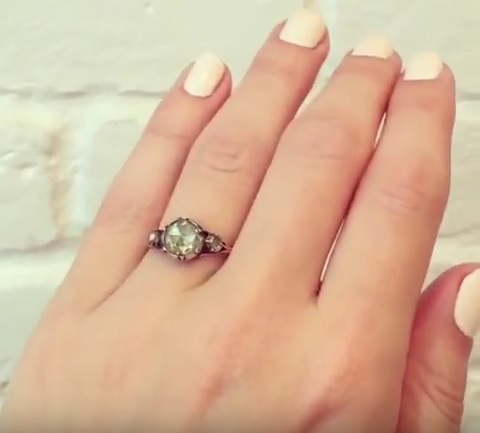
Vintage style wedding rings: Georgian Era

Vintage style wedding and engagement rings offer the perfect opportunity to find a unique one-of-a-kind ring. Georgian era (1714 to 1837) rings are a rare find, but worth the search if you’re looking for handcrafted quality jewelry. This period gets its name from the Hanoverian Monarchs of the United Kingdom who reigned during that time including four Georges: George I who reigned as king from 1714-1727, George II (r. 1727-1760), George III (r. 1760-1820), and George IV who reigned longer than any other king in English history. William the IV finished out the Georgian era reigning from 1830-1837.

Georgian Rose Cut Diamond and Emerald 5-Stone Band

Features of Georgian Era rings

Because the Georgian era covered more than 100 years, the style of wedding rings as well as other jewelry evolved over that time. The Baroque style led in popularity until 1750 with its over-all symmetry and thick ornateness. After 1750, the Rococo style emerged with lighter asymmetrical lines. As a result, the period offers a variety of popular motifs including: bows, crescents, flowers, leaves, and ribbons. The thing that the entire era has in common is that all the jewelry was handcrafted. In fact, the artisans hammered 18 k or higher gold ingots and other metals like silver (for gemstone settings), iron, and steel into thin sheets by hand before they even started to fashion the rings or other pieces.

Rings from the Georgian era often feature gemstones like sapphires, diamonds, and emeralds in closed-back settings. A popular choice included foil backings which enhanced the gemstones scintillation by candlelight. However, if you are fortunate enough to have such an heirloom ring, or to make such a find in your quest for the perfect ring, it is important to note that contact with water will destroy the delicate foil, so be sure not to wear the ring if your hands are going to get wet.


Another thing worth noting, if you’re in the market for a vintage ring from this era, is that because gold assaying wasn’t enforced until the 1900s authentic Georgian jewelry isn’t stamped, nor does it bear any maker’s marks.

Where to find Georgian vintage style rings

Finding vintage wedding rings from this time period can be very difficult, not just because they are from so long ago, but because the jewelers from that time often melted down pieces they considered out-of-date in order to craft pieces fitting the current trend. The best places to shop for these rare rings will be reputable antique jewelry outlets like the Antique Jewellry Company out of London.

Photo credits: Erica Weiner, Erica Weiner

Monday, January 29, 2018

Why Bridesmaids Once Carried Garlic to Weddings

(Updated July, 2026) 

Today, when we hear the word "bridesmaid," we think of close friends standing beside the bride on her wedding day. One may be designated the maid of honor if unmarried or the matron of honor if married.

Modern wedding parties often include a mix of married and unmarried attendants, but historically, bridesmaids were typically young, unmarried women considered to be of marriageable age. Serving as a bridesmaid was not only an honor; it was sometimes seen as an opportunity to find a husband.


Bridesmaids


Duties of the Maid of Honor: Past and Present

Modern maid of honor responsibilities often include:

  • Helping plan the bridal shower or bachelorette party
  • Assisting the bride with dress shopping
  • Coordinating the bridesmaids
  • Helping the bride get dressed on the wedding day
  • Straightening the train before walking down the aisle
  • Holding the bridal bouquet during the ceremony
  • Giving a speech or toast at the reception

Historical duties were quite different.

In the 1700s, the maid of honor might help remove and hold the bride's gloves during the ceremony. Instead of carrying a bouquet, she could be entrusted with the dow-purse—a symbolic representation of the groom's gift or financial provision for his wife. Coins were sometimes placed upon the service book as part of the ceremony, a custom that survived in parts of northern England into the 19th century.


Matron of Honor
The matron of honor joined the right hands of the bride and groom.

Matron of Honor in Ancient Rome

Ancient Roman weddings placed great importance on the woman who attended the bride.

The principal attendant was expected to be a model of virtue, known for her fidelity and good reputation. She could not have been married more than once and was required to have a living husband at the time of the ceremony.

One of her most important duties was to join the right hands of the bride and groom for the first time, symbolizing the union of the couple.

Unusual Bridesmaid's Duties


Unique Bridesmaid Duties Through History

Bridesmaids have performed some unusual tasks over the centuries.

During the medieval period, bridesmaids reportedly dipped plum buns into spiced ale and encouraged the bride to eat them to restore her energy before the festivities.

Other customs included:

  • Leading the bridegroom to the church while the groomsmen escorted the bride.
  • Creating handmade wedding favors from ribbons and flowers.
  • Pinning favors to guests' sleeves or shoulders as they departed.

Victorian bridesmaids also looked quite different from their modern counterparts. Bridesmaids were expected to be younger than the bride and dressed entirely in white, complete with short veils. The bride distinguished herself with a longer, more elaborate veil and train.

By the early 20th century, this custom faded, and white became reserved almost exclusively for the bride.


Bridesmaids
A wedding from middle 1800s

Bridesmaid Superstitions

Wedding traditions are often intertwined with superstition, and bridesmaids were no exception.

Victorian bridesmaids sometimes carried garlic, herbs, and grains to ward off evil spirits and protect the bride from misfortune.

Another superstition warned that if a bridesmaid stumbled while walking down the aisle, she would never marry.

Then there is the familiar saying:

"Always a bridesmaid, never a bride."

While the phrase may sound unfortunate today, being a bridesmaid was once considered an excellent way to meet potential husbands.

However, there was a catch. In the 16th century, it was believed that a woman who served as a bridesmaid three times without marrying had been cursed by evil spirits. Fortunately, there was a remedy: she simply needed to serve four more times to reach the lucky number seven and break the curse.


From Ancient Rome to Modern Weddings

From joining the hands of Roman newlyweds to carrying garlic in Victorian processions, bridesmaids have played an important role in wedding ceremonies for centuries.

Thankfully, today's bridesmaids are more likely to carry bouquets than herbs and can walk down the aisle without worrying about an ancient curse.

Thanks for reading! Have you ever been a bridesmaid? If so, how many times? Let us know in the comments.

*** 

Some links in this post are affiliate links. We are a participant in the Amazon Services LLC Associates Program, an affiliate advertising program designed to provide a means for us to earn fees by linking to amazon.com and affiliate sites. 


Photo credits: wikimedia.org, wikimedia.org, wikimedia.org

Thursday, January 25, 2018

Glide down the aisle in traditional wedding shoes

When it comes to bridal accessories, wedding shoes are one of the most important. For those looking for vintage styles, there are plenty to choose from since traditional wedding shoes have changed over time depending on the style trends of the day. For instance, in the 1920s styles ranged from sparkling pumps to low heel Mary Janes, in the 1930s strappy styles were the rage, in the 1940s brides sported open-toed, chunky-heeled shoes that matched the dress, and in the 1950s ivory satin shoes were popular. Think of your shoes as the finishing touch to complete your wedding day look. It might even mean adding color. That’s right, wedding shoes don’t have to be white.


How to choose the perfect wedding shoes

Today, you can find vintage wedding shoe styles or go with one of the popular designer shoes available. The traditional rule of thumb is to have your shoes complement your dress, but while style is important, comfort is equally important because the bride is on her feet most of the special day. We’re talking about 15 hours or more. And don’t forget the father/daughter dance! You certainly don’t want your feet killing you for that memorable moment. With this in mind, once you find the perfect shoes, be sure to wear them so they are broken in before your wedding day.
 

Things to think about when choosing heel height

If you decide on a shoe with a high heel, how high is too high? The answer to this question rests with the bride. The real question is how high can you walk in gracefully? You want to glide down the aisle, not look like you’re trying to balance on stilts. And think about the rest of the environment you’ll be walking through. Wedding photos in the garden, cobblestone walkways, walking on a boardwalk with cracks – all these kinds of things should be taken into consideration when choosing your shoes.

One more thing to think about when considering the height of wedding shoes, is how tall it will make you. Some brides try not to appear taller than the groom. If this matters to a couple, it is one more thing that will influence the height of the shoes worn.


If you decide to go with tradition, a rule of etiquette when it comes to wedding shoes, is that the bride does not go barefoot, unless maybe she is on the beach or playing the shoe game at the wedding reception. So it’s a good idea to have a pretty pare of flats for backup in case your feet really start to hurt from wearing heels all day.

Photo credits: amazon.com, amazon.com, amazon.com