(Updated March 2026)
Greek weddings today are known for lively celebrations, large guest lists, plate smashing, and delicious desserts like baklava. But ancient Greek wedding traditions were filled with symbolic rituals, elaborate feasts, colorful veils, and lively processions through the city streets.
In ancient Greek society, marriage marked an important transition into adulthood. The celebrations surrounding a wedding could last for days and included music, dancing, sacred offerings, and customs believed to bring fertility and good fortune to the couple.
Girls typically married between the ages of 12 and 15, while men were often older, usually between 25 and 30. The wedding ceremony was considered a major coming-of-age event, and the festivities surrounding it included elaborate feasts, processions, music, and symbolic customs meant to bring fertility and prosperity to the new couple. Many of these traditions reflect elements we still see in weddings today.
Key Ancient Greek Wedding Traditions
Ancient Greek weddings included many customs that symbolized fertility, prosperity, and community celebration. Some of the most notable traditions included:
- Wedding feasts featuring meat from ritual sacrifices and honey-sesame cakes
- Colorful bridal veils believed to protect the bride from evil spirits
- Flower garlands symbolizing new beginnings and fertility Processions through the city accompanied by music and dancing
- Large gatherings of family and friends celebrating the new union
These traditions reveal how deeply marriage was connected to religion, family, and social life in ancient Greece.
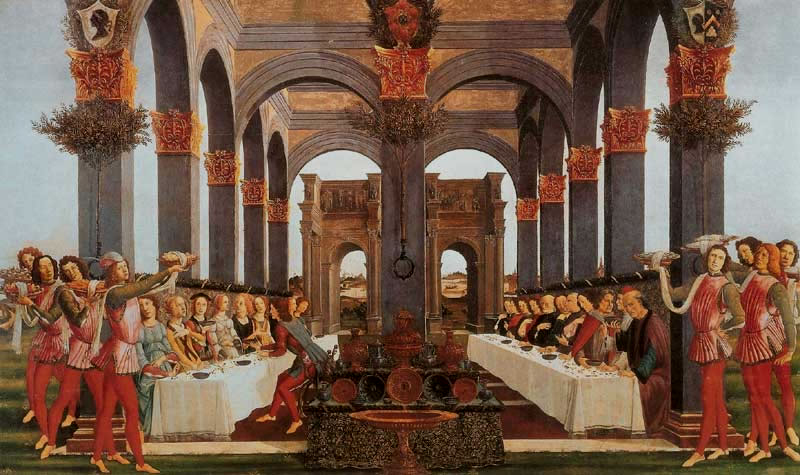
Ancient Greek wedding feast
In ancient Greece, every wedding included a feast. It provided a bountiful amount of meat, often supplied by prenuptial sacrifices. Friends and family of both the bride and groom feasted together in a ritual sense of community, though men and women typically sat on opposite sides of the room.
In Euangelos’ play The Anakalyptomene, we get an idea of just how elaborate the food might have been. His depiction includes veal, pork, hare, custards, cheese, pastries, Lydian treats, egg cakes, and other delicacies. While foods varied from one region to another, there was one traditional food offered at every Greek wedding called sesame.
This dish was made from ground sesame seeds mixed with honey and formed into cakes. The custom was tied to fertility. The belief was that the prolific nature of the sesame seed could somehow be transmitted to the newly married couple.
Ancient Greek bridal customs Ancient Greek bridal customs included a number of symbolic elements that reflected both beauty and protection.
Ancient Greek bridal fashion often included loosely draped gowns gathered at the waist and flowing to the floor. These graceful garments reflected the elegant style often associated with the gods and goddesses of Greek mythology. Today, the “goddess gown” continues to inspire bridal fashion.
Ancient Greek brides also wore veils of yellow or red. These colors represented fire and were thought to scare away evil spirits. Today brides most often wear white, which is commonly associated with purity.
Veils have remained an important bridal accessory for centuries, and modern styles range from cathedral-length designs to shorter options like the birdcage veil.
Brides also wore diamonds, which in ancient Greek culture were believed to be the teardrops of the gods, reflecting the “flames of love.”
In addition, ancient Greek brides carried or wore flower garlands. Flowers symbolized new beginnings, fidelity, and the hope for fertility within the marriage.
Wedding Guest Lists in Ancient Greece
Like modern weddings, ancient Greek weddings included friends and relatives of both the bride and groom.
In everyday life, men and women did not typically gather together publicly in the same setting. Weddings, however, were an exception. Men and women were allowed to assemble in the same room, although they usually sat separately, with men on one side and women on the other.
Even in ancient times, guest lists could grow quite large. In Athens, lawmakers attempted to control excessive celebrations by limiting wedding guests to thirty people. Despite this restriction, it was not uncommon for freeloaders to appear, hoping to enjoy the abundant food.
Where Ancient Greek Weddings Were Held
Ancient Greek weddings were often held in the home of one of the families, usually the father of the bride or the groom. In many cases the two families collaborated to host the celebration.
However, weddings did not always take place in a private home. The wedding depicted in Menander’s play Dyskolos occurs at the shrine of Pan.
Historical inscriptions reveal that this sometimes happened in real life as well. A 300 B.C. inscription from Cos shows that weddings were occasionally held in cult sanctuaries. In this case, the wedding took place in the sanctuary of Herakles Diomdonteios.
Not everyone could use a sanctuary. The facility was only available to members of the group responsible for maintaining it, and there were strict rules governing its use. The wedding had to take place in the same month as a festival honoring Herakles, and part of the meat from the festival sacrifices could be used for the wedding feast.
Herakles himself had to be present in the form of a statue and was even provided with his own dining couch.

Dancing and Wedding Processions
When we think of wedding dances today, we often imagine the bride and groom’s first dance or the father-daughter dance. In ancient Greece, however, dancing accompanied many stages of the wedding celebration.
Young men sometimes performed energetic dances as the bride was led through the city during the wedding procession. These processions included flutes, cymbals, and singing.
Sometimes the groom took part in the procession, though not always. In some cases, the bride was escorted directly to the bridal chamber where the groom awaited her.
Another procession followed after the wedding ceremony when the bride was escorted to the groom’s home.
The ancient Greeks believed these processions had divine significance. They were thought to involve not only the wedding party but also the presence of gods and heroes.
What Were Weddings Like in Ancient Greece?
Overall, weddings in ancient Greece were lively celebrations filled with ritual, music, food, and symbolism. These events marked the bride’s transition into married life and honored the gods believed to bless the marriage.
Many details about these ceremonies come from paintings on ancient Greek pottery and vases. These artistic depictions show wedding processions, brides wearing veils, musicians playing instruments, and feasting guests.
A Final Wedding Custom
One last custom worth mentioning is the practice of pelting the bride and groom with leaves and blossoms. This act symbolized fertility and good fortune for the couple.
In some ways this tradition resembles modern customs such as throwing rice or flower petals after a wedding ceremony.
To learn more specifics about ancient
weddings in Greece check out TheNuptial Ceremony of Ancient Greece and the Articulation of Male Control Through Ritual.
Ancient Greek wedding traditions blended celebration, symbolism, and community. From sesame cakes representing fertility to lively processions through the city streets, these customs reflected the importance of marriage in Greek society.
While modern weddings may look very different, the desire to celebrate love, family, and new beginnings remains much the same.
***
Some links in this post are affiliate links. We are a participant in
the Amazon Services LLC Associates Program, an affiliate advertising program
designed to provide a means for us to earn fees by linking to amazon.com and
affiliate sites.
Thanks so much for being part of our success.
Resource: The Wedding in Ancient Athens, By John Howard Oakley, Rebecca H. Sinos