About Wedding Traditions & Meanings

Showing posts with label indian wedding traditions. Show all posts

Saturday, March 3, 2018

Indian Weddings Are a Family Affair: Ceremony, Customs & Family Traditions

(Updated March, 2026)

India is a land of many subcultures, and with them come variations in wedding traditions. However, one thing remains constant: Indian weddings are not just a union of the bride and groom—they are a joining of families. In Indian culture, family and community play a vital role in life decisions, and they participate actively in wedding customs and celebrations.

We’ve already explored the Mehndi Ceremony, which takes place the night before the wedding and celebrates the bride’s side of the family. Today, let’s look at the wedding ceremony itself.

Indian Wedding customs


Baraat – The Groom’s Procession

The ceremony begins with the baraat, the groom’s procession. The groom is accompanied by family and friends, singing and dancing to music often provided by a professional dhol player (a large bass drum). The bride’s family meets the procession at the entrance, symbolizing their acceptance of the bride as part of their family.


Milni – Meeting of the Families

The milni is the formal greeting between the two families. The bride’s mother welcomes the groom, and other family members hug and exchange garlands. After this, the bride’s family leads the groom to the mandap, a canopied altar representing the home the couple will build together.


Ganesh Puja – Prayer to Lord Ganesh

The ceremony begins with the Ganesh Puja, a prayer to Lord Ganesh, the remover of obstacles. The priest directs the bride’s and groom’s parents in offering flowers and sweets to seek blessings for the marriage.

Kanya Aagaman – Arrival of the Bride

The bride arrives at the mandap accompanied by her maternal uncle, aunt, sisters, cousins, or close friends, depending on regional customs. At the altar, the bride and groom exchange floral garlands in the Jai Mala ceremony, symbolizing mutual acceptance

Kanyadaan and Hasta Melap – Giving Away the Bride

Next comes Kanyadaan, the giving away of the bride. The father pours sacred water into his daughter’s hand and places it in the groom’s hand, representing the transfer of his most precious gift.

During Hasta Melap, the groom’s sister or cousin ties the ends of the groom’s scarf to the bride's wedding sari using betelnuts, copper coins, and rice. This symbolic knot represents the eternal bond of marriage.


Vivah Havan – The Sacred Fire

The priest lights the sacred fire, or Agni, symbolizing the divine presence as a witness to the marriage. The couple walks around the fire seven times (Mangal Phere) while reflecting on the four aspirations of life:

  1. Dharma – duty to each other, family, and God

  2. Artha – prosperity

  3. Karma – energy and passion

  4. Moksha – salvation

During the first three rounds, the bride leads the groom, representing divine energy, and the groom leads the last four rounds, symbolizing balance and completeness. In some regions, the couple races to sit down after completing the rounds—a playful tradition signifying who will rule the household.

Once seated, the bride moves to the groom’s left, close to his heart. The groom places a mangalsutra (sacred black-and-gold necklace) around her neck and applies sindoor (red vermillion) at the crown of her head. These are symbols of a married woman.

The couple then exchanges rings, feeds one another sweets, and receives blessings whispered by family members. The ceremony concludes with flowers and rice showered over the couple.


Bidaai – Bride’s Farewell

The bidaai is the bride’s farewell to her family. The father gives his prized possession to the groom’s father, symbolizing the transfer of responsibility and love. The bride leaves her family home joyfully, beginning her new life at the groom’s house.


Photo credits:

Friday, February 23, 2018

Traditional Wedding Dresses of Indian Brides

(Updated March, 2026)

Indian weddings are known for vibrant colors, elaborate celebrations, and rich traditions. One of the most recognizable aspects of these weddings is the stunning attire worn by the bride.

The Indian wedding tradition I’m most familiar with is the Mehndi Ceremony, which takes place before the wedding. If you’ve seen the ornate henna tattoos worn by Indian brides, this is the ceremony in which they are applied. It is a joyful celebration that typically takes place the night before the wedding and is traditionally celebrated by the bride’s side of the family.

During the ceremony, a professional mehndi artist or family member applies henna in intricate designs on the hands and feet of the bride and often other women in the family. These designs symbolize joy, beauty, spiritual awakening, and blessings for the marriage.


Indian Bridal Sari

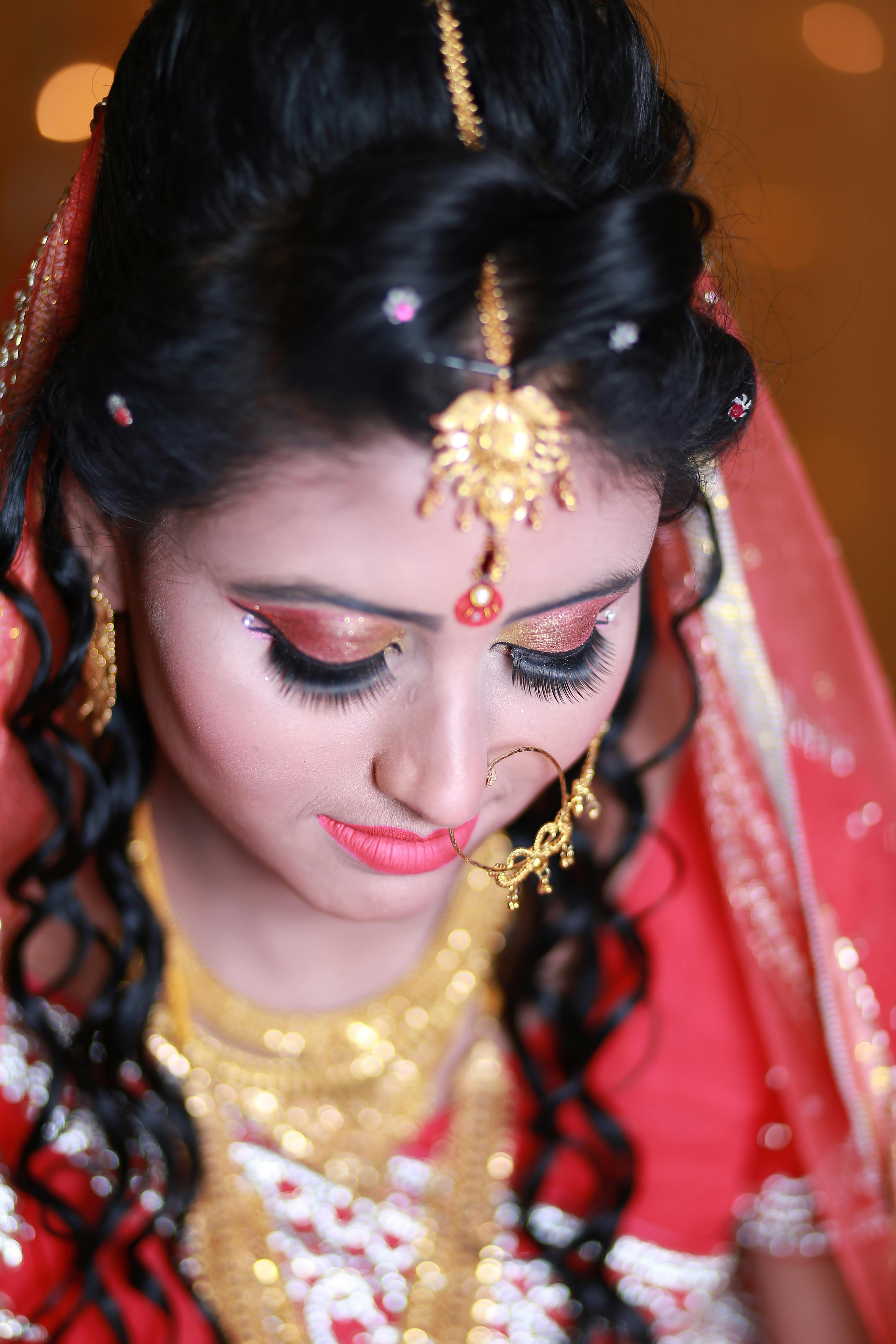
Indian Brides Traditionally Wear Red

The following day, the Vivaah (marriage) takes place with great grandeur, color, and tradition.

Color plays an important role in Indian weddings, and brides traditionally wear red. In Hindu culture, red symbolizes prosperity, fertility, and marital bliss, making it one of the most auspicious colors for weddings.

Traditionally, brides wear either a red lehenga or a red sari, though the exact style of dress often depends on the region of India where the bride is from. 


Indian Bride

Why Red Became the Traditional Color for Indian Brides

The tradition of Indian brides wearing red has deep cultural and religious roots. In Hindu culture, red is associated with Shakti, the divine feminine energy that represents strength, prosperity, and fertility. It is also considered a symbol of new beginnings and marital happiness. Because of these meanings, red became the favored color for bridal attire, signifying that the bride is entering a new and prosperous stage of life. Even today, many Indian brides continue to wear red to honor this long-standing tradition.

Bridal Sari

The sari (also spelled saree or shari) is widely regarded as a symbol of grace in cultures across the Indian subcontinent. In South India, it remains the preferred bridal garment.

A sari is a long piece of fabric, typically five to nine yards in length, that is elegantly draped around the waist with one end falling over the shoulder. Traditionally, it leaves the midriff visible.

Today the sari is worn over an underskirt and paired with a fitted blouse. In South India this blouse is often called a ravike. The blouse typically has short sleeves and is cropped, complementing the graceful drape of the sari.

Bridal saris are often made from luxurious fabrics such as silk and are richly decorated with gold thread, embroidery, and intricate patterns.

 
Bridal Sari

Bridal Lehenga Choli

Another traditional bridal outfit worn by many Indian brides is the lehenga choli.

The bridal lehenga consists of a long, ornate skirt paired with a fitted cropped blouse known as a choli. This outfit is typically worn with a long scarf called a dupatta, which may be draped over the shoulder or over the bride’s head like a veil.

Bridal lehengas are often heavily embellished with embroidery, beadwork, sequins, and gold thread, creating a striking and luxurious appearance for the wedding ceremony.

Tangerine Sari


Modern Colors for Indian Bridal Wear

While red remains the traditional color for Indian brides, many modern brides choose to personalize their look.

Today it is not uncommon to see brides wearing colors such as green, blue, gold, coral, or tangerine, while still incorporating traditional fabrics, embroidery, and jewelry.

These modern variations allow brides to express their personal style while still honoring the rich traditions of Indian bridal fashion.

*** 

Some links in this post are affiliate links. We are a participant in the Amazon Services LLC Associates Program, an affiliate advertising program designed to provide a means for us to earn fees by linking to amazon.com and affiliate sites. 


Photo credits: pexels, pxhere, amazon