About Wedding Traditions & Meanings

Showing posts sorted by date for query wedding dresses. Sort by relevance Show all posts

Saturday, May 30, 2026

Vintage Wedding Styles Perfect for Today’s Brides (and Their Hidden Meanings)

Vintage wedding styles are everywhere, from lace sleeves and flowing silhouettes to Old Hollywood glamour. But these designs aren’t just beautiful callbacks to the past. They are rooted in history, shaped by the beliefs, expectations, and values of the time in which they first appeared.

What feels like a personal style choice today often carries echoes of something deeper, ideas about love, identity, status, and even protection. Understanding these hidden meanings reveals that vintage wedding styles are more than trends.

They are traditions, reimagined.


Victorian bridal style

Victorian-Inspired Styles: Modesty and Meaning

High necklines, long sleeves, and intricate lace details define Victorian-inspired wedding dresses. These styles were heavily influenced by Queen Victoria, whose 1840 wedding set lasting trends in bridal fashion.

But the look wasn’t just about elegance.

Hidden meaning:

  • Modesty reflected moral character
  • A bride’s appearance represented her family’s values
  • Clothing emphasized virtue over individuality

In this era, weddings were as much about social standing and reputation as they were about romance.

Lace, Trains, and Embellishment: A Display of Status

Elaborate lace, long trains, and detailed embellishments are often seen as timeless and romantic. Historically, they also served a more practical purpose, signaling wealth.

Hidden meaning:

  • The more fabric and detail, the higher the status
  • Fine lace and long trains required resources and labor
  • Impracticality itself became a symbol of privilege

Even the popularity of white gowns was tied to this idea, keeping a white dress clean was a luxury many could not afford.

1920s bridal style

1920s Styles: Freedom and Changing Roles

The 1920s introduced lighter fabrics, dropped waists, and shorter hemlines, a dramatic shift from earlier, more restrictive designs. This change followed the societal upheaval of World War I.

Hidden meaning:

  • A move toward independence and self-expression
  • A rejection of rigid expectations
  • Marriage evolving into partnership rather than duty

These styles reflected a new vision of the modern bride, one with more agency and voice.

1950s bridal style

1950s Silhouettes: Romance and Idealism

Full skirts, cinched waists, and soft, feminine lines defined bridal fashion in the 1950s. This look was popularized in part by figures like Grace Kelly, whose wedding dress became iconic.

Hidden meaning:

  • A return to traditional gender roles
  • Marriage as stability and idealized romance
  • Emphasis on grace, beauty, and refinement

In a time of cultural rebuilding, weddings reflected a desire for comfort, order, and enduring love.
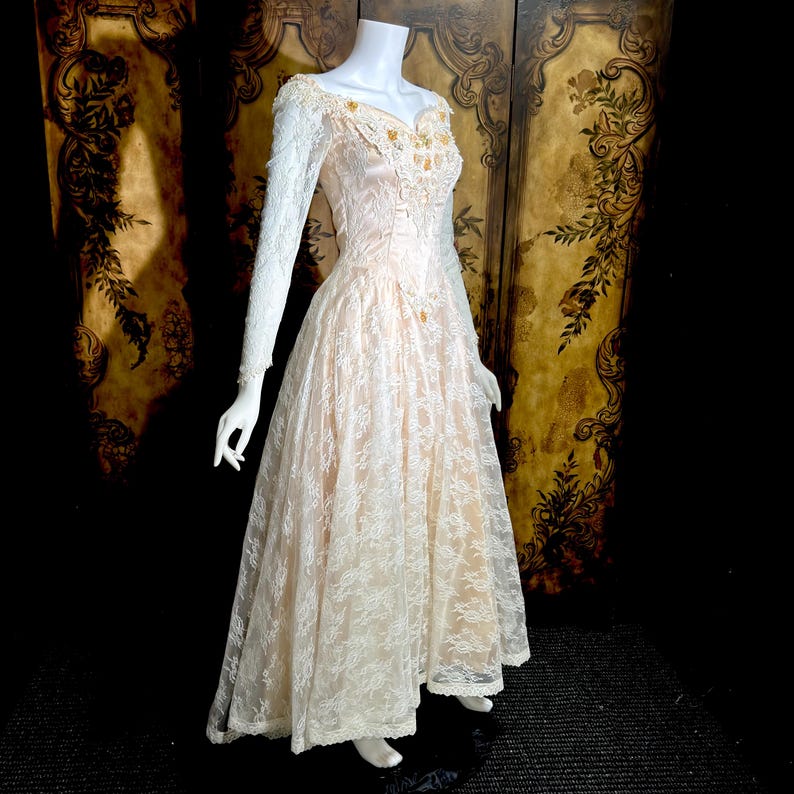


1970s Bohemian Styles: Nature and Individuality

Flowing fabrics, relaxed silhouettes, and floral crowns define the bohemian styles of the 1970s, many of which remain popular today.

Hidden meaning:

  • Connection to nature and natural cycles
  • Emphasis on individuality and personal expression
  • A more spiritual or less formal view of marriage

These styles echo older traditions where weddings were closely tied to the land, seasons, and fertility.

Veils and Layers: Protection and Symbolism

Many vintage-inspired looks include veils, long sleeves, or layered fabrics, details that once held symbolic meaning beyond appearance.

Hidden meaning:

  • Protection from evil spirits or bad luck
  • Concealment to ward off jealousy or ill intent
  • Acknowledgment of the wedding as a vulnerable, transitional moment

These elements connect directly to long-standing wedding superstitions and protective rituals.

Why These Styles Are Returning

Vintage wedding styles continue to resonate with modern brides, but not just because they are beautiful.

They offer something more:

  • A sense of history and continuity
  • Meaning behind aesthetic choices
  • A way to express identity through tradition

Today’s brides are not simply following tradition; they are choosing which traditions to carry forward.

A Tradition Reimagined

Many of these vintage styles were originally paired with symbolic color choices—each carrying its own meaning across cultures.

You can explore those traditions further in The Hidden Meaning of Wedding Colors Around the World.”

Together, these elements reveal a deeper truth:

Weddings have always been about more than the moment. They are shaped by the beliefs, values, and hopes of the people taking part.

More Than a Style Choice

What we call “vintage” today was once modern, designed to reflect the world as it was.

Now, as these styles return, they bring their meanings with them.

Whether a bride chooses lace for its elegance, a flowing gown for its freedom, or a veil for its symbolism, she is participating in a tradition that stretches far beyond the present.

A tradition woven not just in fabric, but in meaning.

*** 

Some links in this post are affiliate links. We are a participant in the Amazon Services LLC Associates Program, an affiliate advertising program designed to provide a means for us to earn fees by linking to amazon.com and affiliate sites. 


Saturday, April 18, 2026

The Hidden Meaning of Wedding Colors Around the World

Walk into a wedding almost anywhere in the world, and you’ll be surrounded by color, white gowns, red saris, gold accents, blue ribbons. These choices may feel like personal style or cultural tradition, but their origins run much deeper.

Hidden Meaning of Wedding Colors

Wedding colors are not just aesthetic. They are symbolic, shaped by centuries of belief about love, luck, protection, and even the supernatural. In many cases, the same color can carry completely different meanings depending on where and when you look.

To understand wedding traditions, we have to look at what these colors once meant.

Purity, status or mouring?


White: Purity, Status… or Mourning?

Today, white is the most recognizable wedding color in Western cultures, often associated with purity and innocence. But this tradition is more recent than many realize.

It gained popularity after Queen Victoria wore a white gown at her 1840 wedding, an unusual choice at the time that quickly became fashionable among the elite.

Before that, brides simply wore their best dress, regardless of color.

But white does not carry the same meaning everywhere. In parts of Asia, white has long been associated with mourning and funerals. A white wedding dress in those contexts would symbolize loss rather than celebration.

What this reveals:

Color is culturally coded. What represents purity in one place may represent death in another.

Luck, joy and protection


Red: Luck, Joy, and Protection

In countries like China and India, red is the dominant wedding color, and for good reason.

Red symbolizes:

  • Prosperity
  • Fertility
  • Happiness
  • Good fortune

But beyond celebration, red also carried protective meaning. In many traditions, it was believed to ward off evil spirits and negative energy, an important concern during weddings, which were seen as vulnerable, transitional moments.

What this reveals:

Color wasn’t just symbolic; it was functional, used as a form of spiritual protection.

From mourning to elegance


Black: From Mourning to Modern Elegance

Traditionally, black was avoided in Western weddings due to its association with mourning and death. Wearing black to a wedding was once considered inappropriate or even ominous.

Today, that perception is shifting. Black wedding dresses and formalwear are increasingly chosen for their elegance, sophistication, and individuality.

In other cultural contexts, black has also symbolized:

  • Strength
  • Formality
  • Renewal or rebirth

What this reveals:

Color meanings are not fixed. They evolve with time, culture, and changing attitudes.

Blue was often thought to repel curses


Blue: Fidelity and Protection

The tradition of wearing “something blue” comes from an old English rhyme and reflects long-standing beliefs about the color’s meaning.

Blue has been associated with:

  • Loyalty and fidelity
  • Purity
  • Protection from the “evil eye”

In folklore, blue was often thought to repel curses or negative forces, making it a subtle but meaningful addition to wedding attire.

What this reveals:

Even small touches of color carried intentional meaning, often tied to unseen spiritual concerns.

Life, Growth and the Supernatural


Green: Life, Growth… and the Supernatural

Green seems like a natural fit for weddings, symbolizing growth, fertility, and new beginnings.

But in parts of European folklore, green had a more complicated reputation. It was strongly associated with nature spirits and fair folk, and wearing green to a wedding was sometimes considered risky, thought to invite mischief or bad luck.

What this reveals:

The same color could represent life and renewal or supernatural danger, depending on cultural beliefs.

Celebration and abundance


Gold and Yellow: Wealth and Blessing

Gold and yellow tones have long been associated with:

  • Wealth and prosperity
  • The sun and divine favor
  • Celebration and abundance

In many cultures, gold is prominently featured in wedding attire and decoration, especially in ceremonies tied to status or family heritage.

What this reveals:

Color often reflected not just belief, but social standing and aspiration.

When Colors Collide: Same Shade, Different Meaning

One of the most fascinating aspects of wedding traditions is how meanings overlap and contradict:

  • White: purity in some cultures, mourning in others
  • Red: danger in some contexts, luck and joy in others
  • Green: life and growth or misfortune and mischief

These differences remind us that traditions are shaped by local beliefs, environments, and histories.

Why Color Matters in Wedding Traditions

Weddings have always been more than celebrations. They mark a major life transition, a moment when, historically, people believed the boundary between the known and unknown was thinner.

Because of this, weddings became surrounded by symbolism meant to:

  • Protect the couple
  • Ensure fertility and prosperity
  • Ward off bad luck
  • Signal social status

Color played a central role in all of this. It was one of the most visible and powerful ways to express belief.

A Tradition Woven in Color

Across cultures and centuries, wedding colors reveal what people valued most and what they feared.

Whether used to invite good fortune, display wealth, or guard against unseen forces, these colors carry stories far older than modern ceremonies.

Today, couples may choose colors for style or personal meaning. But beneath those choices lies a deeper history, one where every shade once held power.

*** 

Some links in this post are affiliate links. We are a participant in the Amazon Services LLC Associates Program, an affiliate advertising program designed to provide a means for us to earn fees by linking to amazon.com and affiliate sites. 


Image credits: pexels.com, pexels.compexels.com, pexels.compexels.com  


Monday, March 2, 2026

What Is a Birdcage Wedding Veil—and Is It Right for You?

A birdcage wedding veil is short, chic, and unmistakably vintage. Unlike longer veils that trail behind the bride, a birdcage veil typically covers part of the face or frames it delicately, making it a bold yet understated choice.

Often made from Russian netting or French tulle, birdcage veils are usually worn to skim the eyes, cheekbones, or chin, and they’ve been making brides look effortlessly elegant for decades.

Bird Cage Bridal Veil


The History of the Birdcage Veil

The birdcage veil rose to popularity during the 1940s and 1950s, a time when weddings reflected both practicality and style. During and after World War II, brides favored shorter veils and simpler gowns, often paired with tailored suits or tea-length dresses.

This style echoed everyday fashion of the era, when women commonly wore small veils or netted hats. The birdcage veil became a symbol of modern femininity, confidence, and sophistication, rather than formality or superstition.


Why Brides Choose a Birdcage Veil

Today’s brides are drawn to birdcage veils for many reasons:

  • Vintage or retro-inspired weddings

  • City hall or intimate ceremonies

  • Short, tea-length, or nontraditional dresses

  • Brides who want drama without volume

Unlike longer veils, birdcage veils don’t trail, tangle, or require bustling, making them especially appealing for relaxed or minimalist celebrations.

How to Wear a Birdcage Wedding Veil

Birdcage veils are typically attached with:

  • A small comb

  • Hairpins

  • A headband or fascinator

They’re most often worn:

  • Slightly off-center for a vintage look

  • Paired with finger waves, soft curls, or a sleek bun

  • With bold lipstick or statement earrings, since the veil draws attention to the face

Some brides wear the veil throughout the ceremony, while others lift or remove it after walking down the aisle.

Is a Birdcage Veil Right for You?

A birdcage veil may be the perfect choice if you want:

  • A fashion-forward look

  • A nod to mid-century wedding tradition

  • Something lightweight and easy to wear

  • A veil that feels personal and expressive, rather than formal

While it doesn’t suit every wedding dress style—particularly ball gowns or long trains—it shines when paired with simpler silhouettes and confident styling.


The birdcage wedding veil proves that tradition doesn’t always mean long and flowing. Rooted in 20th-century fashion history, it offers brides a way to honor the past while embracing individuality and modern style.

*** 

Some links in this post are affiliate links. We are a participant in the Amazon Services LLC Associates Program, an affiliate advertising program designed to provide a means for us to earn fees by linking to amazon.com and affiliate sites. 


Saturday, November 15, 2025

The White Wedding Dress: From Royalty to Modern Tradition

When we think of weddings today, the image of a bride in a white gown often comes to mind. But the white wedding dress we know now wasn’t always the norm. Its story is a fascinating mix of history, culture, and symbolism that spans centuries.

Brides wore their best dress


 A Colorful History of Bridal Fashion

Before white became the standard, brides wore dresses in all colors, often chosen based on social status, symbolism, and practicality. Buying a dress specifically for a wedding was uncommon; brides simply wore their best available attire.

  • Blue: Once considered the color of the Virgin Mary, blue symbolized purity, loyalty, and fidelity, giving rise to the tradition of carrying “something blue.”
  • Red: In medieval Europe, red was a symbol of wealth and nobility, while in Eastern cultures it represents love, happiness, and prosperity, still popular in modern Chinese and Indian weddings.
  • Green: Despite representing growth and hope today, green was historically considered unlucky in Europe because of its association with fairies.
  • Pink and Yellow: Often chosen for aesthetic reasons or seasonal trends, these colors had varied superstitions attached to them, from luck to impropriety.
    In medieval Europe, red was a symbol of wealth and nobility

The Birth of the White Wedding Dress

White gowns didn’t originally symbolize virginity. Instead, wealth and social status were the key indicators. The color white was expensive to maintain, making it impractical for daily wear but perfect for royalty and the upper classes.

Queen Victoria wedding dress


The turning point came in 1840 when Queen Victoria married Prince Albert in a white gown. Her choice sparked a trend across Europe and North America, and white gradually became associated with elegance, sophistication, and celebration.

Carole Lombard and William Powell 1931 

White Through the 20th Century

  • Great Depression: Economic hardship led many brides to wear darker dresses again, as purchasing a white gown was seen as extravagant.
  • Post-WWII Boom: The rise of consumer culture and accessible fabrics helped white regain its dominance in Western weddings.
  • Modern Interpretation: Today, white is widely seen as a symbol of purity, new beginnings, and romance, though personal choice and style often drive color selection.
Blue Wedding Dress
 

Modern Brides and Historical Colors

Interestingly, many brides today are embracing colors that were popular before white took over, including blues, reds, and even greens and black. This revival allows couples to honor history, culture, and personal expression, blending centuries of bridal tradition with modern aesthetics.

Why Understanding History Matters

Exploring the history of the white wedding dress shows that traditions are fluid, influenced by culture, economics, and symbolism. Every choice, from color to fabric, tells a story about the bride, her family, and the era in which she lived. Whether white or boldly colored, a wedding gown carries a rich legacy that connects past and present.

***

Some links in this post are affiliate links. We are a participant in the Amazon Services LLC Associates Program, an affiliate advertising program designed to provide a means for us to earn fees by linking to amazon.com and affiliate sites.

Thanks so much for being part of our success.


Photo credits: picryl.com,  facebookpicryl.com, pexels.com


Wednesday, September 20, 2023

History of black wedding dresses

While many in the West today see the black wedding dress as a modern gothic statement or a way to buck tradition, its history is far richer and far older. Black wedding dresses have been worn for thousands of years across cultures, often symbolizing solemnity, practicality, or devotion.


Bridal dresses

Black wedding dress in Chinese history

The origins of the black wedding dress can be traced back over 3,000 years to the Zhou Dynasty (1046–256 BC) in China. Brides at the time wore modest, solemn black gowns over light red undergarments. Their hair was styled up and secured with a band and hairpin, reflecting both elegance and formality.


Black wedding dress


Today, traditional Chinese bridal dresses vary by region. Northern brides usually wear a mostly red dress decorated with intricate gold and silver designs, while southern brides prefer a two-piece red gown adorned with gold dragons and phoenixes. Modern couples, however, often opt for simplified, contemporary wedding dresses rather than following strict regional traditions.

Spanish brides wore black

In Spain, Roman Catholic brides historically wore black lace gowns with a black lace veil, or mantilla, draped over the head and shoulders. The veil symbolized the bride’s vow to love her husband until death, highlighting black as a color of solemn commitment rather than rebellion.

Black wedding dress with large bustle


History of the black wedding dress in the West

White wedding gowns became popular in the Victorian era, following Queen Victoria’s wedding. Before the white dress, most brides in Western Europe wore a variety of colors, but black wedding dresses were a popular choice. Not because it was the most fashionable, but because they were most practical. Wedding dresses were expensive and most women couldn’t afford a special dress to where one time. Instead, they selected a black dress because the dark color didn’t show stains, and the dress could be worn following the wedding.

Women's Lace Mermaid Wedding Dress

 Available on Amazon


Today, some brides choose black thinking they are defying tradition—but in reality, they are returning to it. As the saying goes, there’s nothing new under the sun. Whether for style, symbolism, or practicality, the black wedding dress remains a fascinating and versatile choice that spans cultures and centuries.

* * * *

Some links in this post are affiliate links. We are a participant in the Amazon Services LLC Associates Program, an affiliate advertising program designed to provide a means for us to earn fees by linking to amazon.com and affiliate sites.


Photo credits: Photo by Murat IŞIK Photo by Bormann Chen