About Wedding Traditions & Meanings

Saturday, February 24, 2018

Mehndi wedding – the meaning behind Mehndi tattoos


If you’ve heard of a Mehndi wedding you might ask, “What is Mehndi?” It’s actually a small tropical shrub which can be ground into a paste when dried to create a rusty-red pigment, but it is also known as the practice of painting elaborate henna patterns on the skin. When all this comes together, the pigment from the Mehndi is used to create temporary mehndi wedding tattoos in Hindu weddings. It is applied at the Mehndi Ceremony which takes place the night before the Vivaah (marriage) in a celebration for the bride’s side of the family. For this party, a professional Mehndi artist or family member applies the Mehndi in intricate designs on the hands and feet of the bride and other women in the family. Today, Hindus often use the terms mehendi and marriage interchangeably. 


Meaning behind Mehndi tattoos

Much that is involved in the Mehndi wedding holds special significance and meaning. In the case of these Mehndi tattoo designs, they symbolize joy, beauty, spiritual awakening, and offering, but beyond that they signify the prosperity the bride will bring to her husband. And it’s more than an artistic expression. For a Hindu Vivaah, it plays such a vital role in a number of the rites during the nuptials that if there is no Mehendi, there is no wedding!


Superstitions behind the Mehndi wedding tattoos

While the Mehndi plant creates a rusty color pigment, it is considered a good sign for the newlyweds if the wife’s tattoos are created by deeply colored designs. Among Hindu women, it is commonly believed that the darker the design on the bride’s palms, the more her mother-in-law will love her! Another bonus for a darker imprint is that the new bride isn’t expected to do any household chores until her wedding Mehndi fades.


Photo credits: needpix, pixabay

Friday, February 23, 2018

Traditional Wedding Dresses of Indian Brides

(Updated March, 2026)

Indian weddings are known for vibrant colors, elaborate celebrations, and rich traditions. One of the most recognizable aspects of these weddings is the stunning attire worn by the bride.

The Indian wedding tradition I’m most familiar with is the Mehndi Ceremony, which takes place before the wedding. If you’ve seen the ornate henna tattoos worn by Indian brides, this is the ceremony in which they are applied. It is a joyful celebration that typically takes place the night before the wedding and is traditionally celebrated by the bride’s side of the family.

During the ceremony, a professional mehndi artist or family member applies henna in intricate designs on the hands and feet of the bride and often other women in the family. These designs symbolize joy, beauty, spiritual awakening, and blessings for the marriage.


Indian Bridal Sari

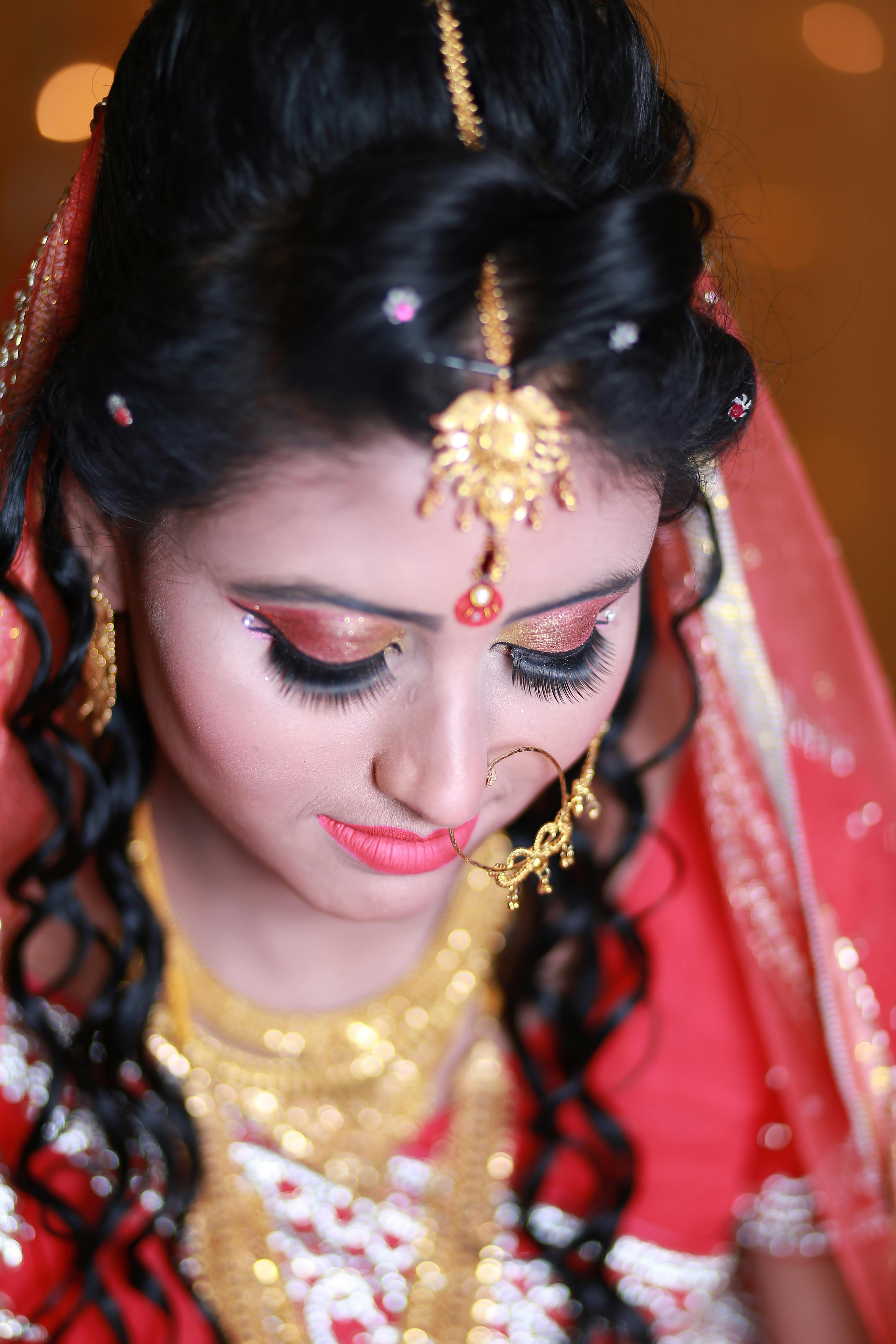
Indian Brides Traditionally Wear Red

The following day, the Vivaah (marriage) takes place with great grandeur, color, and tradition.

Color plays an important role in Indian weddings, and brides traditionally wear red. In Hindu culture, red symbolizes prosperity, fertility, and marital bliss, making it one of the most auspicious colors for weddings.

Traditionally, brides wear either a red lehenga or a red sari, though the exact style of dress often depends on the region of India where the bride is from. 


Indian Bride

Why Red Became the Traditional Color for Indian Brides

The tradition of Indian brides wearing red has deep cultural and religious roots. In Hindu culture, red is associated with Shakti, the divine feminine energy that represents strength, prosperity, and fertility. It is also considered a symbol of new beginnings and marital happiness. Because of these meanings, red became the favored color for bridal attire, signifying that the bride is entering a new and prosperous stage of life. Even today, many Indian brides continue to wear red to honor this long-standing tradition.

Bridal Sari

The sari (also spelled saree or shari) is widely regarded as a symbol of grace in cultures across the Indian subcontinent. In South India, it remains the preferred bridal garment.

A sari is a long piece of fabric, typically five to nine yards in length, that is elegantly draped around the waist with one end falling over the shoulder. Traditionally, it leaves the midriff visible.

Today the sari is worn over an underskirt and paired with a fitted blouse. In South India this blouse is often called a ravike. The blouse typically has short sleeves and is cropped, complementing the graceful drape of the sari.

Bridal saris are often made from luxurious fabrics such as silk and are richly decorated with gold thread, embroidery, and intricate patterns.

 
Bridal Sari

Bridal Lehenga Choli

Another traditional bridal outfit worn by many Indian brides is the lehenga choli.

The bridal lehenga consists of a long, ornate skirt paired with a fitted cropped blouse known as a choli. This outfit is typically worn with a long scarf called a dupatta, which may be draped over the shoulder or over the bride’s head like a veil.

Bridal lehengas are often heavily embellished with embroidery, beadwork, sequins, and gold thread, creating a striking and luxurious appearance for the wedding ceremony.

Tangerine Sari


Modern Colors for Indian Bridal Wear

While red remains the traditional color for Indian brides, many modern brides choose to personalize their look.

Today it is not uncommon to see brides wearing colors such as green, blue, gold, coral, or tangerine, while still incorporating traditional fabrics, embroidery, and jewelry.

These modern variations allow brides to express their personal style while still honoring the rich traditions of Indian bridal fashion.

*** 

Some links in this post are affiliate links. We are a participant in the Amazon Services LLC Associates Program, an affiliate advertising program designed to provide a means for us to earn fees by linking to amazon.com and affiliate sites. 


Photo credits: pexels, pxhere, amazon

Monday, February 19, 2018

How does today's average wedding budget compare to the past?


Today, how much you have to spend on your wedding depends on how much you have to spend. This amount is a combination of three sources of money: individual savings (bride’s and groom’s); the amount which can be set aside from current income; and contributions from parents or other loved ones. According to Cost of Wedding, “The average wedding cost in the United States is $25,764. Couples, on average, spend between $19,323 and $32,205 but, most couples spend less than $10,000.” How does this compare to wedding budgets of the past? You guessed it, its much higher, but here’s why.

Receptions were simpler and optional
Today, a wedding reception costs around $12,000 - $14,006 on average. This includes the facility, food, drinks and incidentals like tables, chairs and linens. In the past, wedding receptions were optional. If it didn’t fit the budget, it didn’t happen. In fact, the 1961 copy of Check List for a Perfect Wedding, described how the receiving line should be arranged "if there was to be no reception." When receptions were held they were typically much simpler and limited to serving cake and punch or a breakfast reception with family members serving guests.

Home weddings were common
In the past, home weddings were commonplace. This practice was depicted in the 60s TV show, “The Farmer’s Daughter.” Usually, nuptials were exchanged with a few family members and witnesses present. According to the 1879 Wedding etiquette and Usages of Polite Society, talked about home wedding practice stating the couple were to enter the room and face the wedding official. Refreshments were usually served following the ceremony.
 
Inger Stevens and William Windom from The Farmer's Daughter

Parents role in paying for the wedding
Most etiquette books of times past said the bride's parents were responsible for most of the expenses, but this wasn’t the practice across the board. Cultural communities often had other traditions. For instance, in the 1920s, Italian-American grooms were expected to pay for the reception.

One of the biggest differences in wedding budgets in the past was the focus. Today, couples spend significant money on their rings and receptions. Back in the late 1800s and early 1900s a standard wedding ring was a band of gold. Couples of the past put their money toward their honeymoons and the place they planned to live following their marriage. So financially, the focus was life following the wedding, not the wedding itself.

Photo credits: flickr, wikipedia