About Wedding Traditions & Meanings

Tuesday, September 4, 2018

Ancient Greek Wedding Traditions: Surprising Customs, Feasts, and Bridal Rituals

(Updated March 2026)

Greek weddings today are known for lively celebrations, large guest lists, plate smashing, and delicious desserts like baklava. But ancient Greek wedding traditions were filled with symbolic rituals, elaborate feasts, colorful veils, and lively processions through the city streets.

In ancient Greek society, marriage marked an important transition into adulthood. The celebrations surrounding a wedding could last for days and included music, dancing, sacred offerings, and customs believed to bring fertility and good fortune to the couple.

Girls typically married between the ages of 12 and 15, while men were often older, usually between 25 and 30. The wedding ceremony was considered a major coming-of-age event, and the festivities surrounding it included elaborate feasts, processions, music, and symbolic customs meant to bring fertility and prosperity to the new couple. Many of these traditions reflect elements we still see in weddings today.

 
Ancient Greek Wedding Traditions


Key Ancient Greek Wedding Traditions

Ancient Greek weddings included many customs that symbolized fertility, prosperity, and community celebration. Some of the most notable traditions included:

  • Wedding feasts featuring meat from ritual sacrifices and honey-sesame cakes
  •  Colorful bridal veils believed to protect the bride from evil spirits
  •  Flower garlands symbolizing new beginnings and fertility Processions through the city accompanied by music and dancing
  •  Large gatherings of family and friends celebrating the new union

These traditions reveal how deeply marriage was connected to religion, family, and social life in ancient Greece.
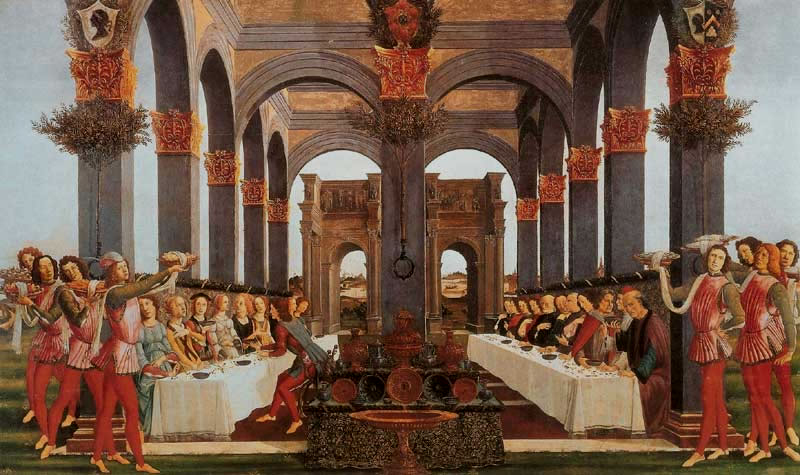

Ancient Greek wedding feast

In ancient Greece, every wedding included a feast. It provided a bountiful amount of meat, often supplied by prenuptial sacrifices. Friends and family of both the bride and groom feasted together in a ritual sense of community, though men and women typically sat on opposite sides of the room.

In Euangelos’ play The Anakalyptomene, we get an idea of just how elaborate the food might have been. His depiction includes veal, pork, hare, custards, cheese, pastries, Lydian treats, egg cakes, and other delicacies. While foods varied from one region to another, there was one traditional food offered at every Greek wedding called sesame.

This dish was made from ground sesame seeds mixed with honey and formed into cakes. The custom was tied to fertility. The belief was that the prolific nature of the sesame seed could somehow be transmitted to the newly married couple.


Ancient Greek bridal customs

Ancient Greek bridal customs included a number of symbolic elements that reflected both beauty and protection.

Ancient Greek bridal fashion often included loosely draped gowns gathered at the waist and flowing to the floor. These graceful garments reflected the elegant style often associated with the gods and goddesses of Greek mythology. Today, the “goddess gown” continues to inspire bridal fashion.

Ancient Greek brides also wore veils of yellow or red. These colors represented fire and were thought to scare away evil spirits. Today brides most often wear white, which is commonly associated with purity.

Veils have remained an important bridal accessory for centuries, and modern styles range from cathedral-length designs to shorter options like the birdcage veil.


Brides also wore diamonds, which in ancient Greek culture were believed to be the teardrops of the gods, reflecting the “flames of love.”

In addition, ancient Greek brides carried or wore flower garlands. Flowers symbolized new beginnings, fidelity, and the hope for fertility within the marriage.

Wedding Guest Lists in Ancient Greece

Like modern weddings, ancient Greek weddings included friends and relatives of both the bride and groom.

In everyday life, men and women did not typically gather together publicly in the same setting. Weddings, however, were an exception. Men and women were allowed to assemble in the same room, although they usually sat separately, with men on one side and women on the other.

Even in ancient times, guest lists could grow quite large. In Athens, lawmakers attempted to control excessive celebrations by limiting wedding guests to thirty people. Despite this restriction, it was not uncommon for freeloaders to appear, hoping to enjoy the abundant food.


Where Ancient Greek Weddings Were Held

Ancient Greek weddings were often held in the home of one of the families, usually the father of the bride or the groom. In many cases the two families collaborated to host the celebration.

However, weddings did not always take place in a private home. The wedding depicted in Menander’s play Dyskolos occurs at the shrine of Pan.

Historical inscriptions reveal that this sometimes happened in real life as well. A 300 B.C. inscription from Cos shows that weddings were occasionally held in cult sanctuaries. In this case, the wedding took place in the sanctuary of Herakles Diomdonteios.

Not everyone could use a sanctuary. The facility was only available to members of the group responsible for maintaining it, and there were strict rules governing its use. The wedding had to take place in the same month as a festival honoring Herakles, and part of the meat from the festival sacrifices could be used for the wedding feast.

Herakles himself had to be present in the form of a statue and was even provided with his own dining couch.


Dancing and Wedding Processions

When we think of wedding dances today, we often imagine the bride and groom’s first dance or the father-daughter dance. In ancient Greece, however, dancing accompanied many stages of the wedding celebration.

Young men sometimes performed energetic dances as the bride was led through the city during the wedding procession. These processions included flutes, cymbals, and singing.

Sometimes the groom took part in the procession, though not always. In some cases, the bride was escorted directly to the bridal chamber where the groom awaited her.

Another procession followed after the wedding ceremony when the bride was escorted to the groom’s home.

The ancient Greeks believed these processions had divine significance. They were thought to involve not only the wedding party but also the presence of gods and heroes.


What Were Weddings Like in Ancient Greece?

Overall, weddings in ancient Greece were lively celebrations filled with ritual, music, food, and symbolism. These events marked the bride’s transition into married life and honored the gods believed to bless the marriage.

Many details about these ceremonies come from paintings on ancient Greek pottery and vases. These artistic depictions show wedding processions, brides wearing veils, musicians playing instruments, and feasting guests.

A Final Wedding Custom

One last custom worth mentioning is the practice of pelting the bride and groom with leaves and blossoms. This act symbolized fertility and good fortune for the couple.

In some ways this tradition resembles modern customs such as throwing rice or flower petals after a wedding ceremony.

To learn more specifics about ancient weddings in Greece check out TheNuptial Ceremony of Ancient Greece and the Articulation of Male Control Through Ritual. 


Ancient Greek wedding traditions blended celebration, symbolism, and community. From sesame cakes representing fertility to lively processions through the city streets, these customs reflected the importance of marriage in Greek society.

While modern weddings may look very different, the desire to celebrate love, family, and new beginnings remains much the same.


***

Some links in this post are affiliate links. We are a participant in the Amazon Services LLC Associates Program, an affiliate advertising program designed to provide a means for us to earn fees by linking to amazon.com and affiliate sites.


Thanks so much for being part of our success.
 

Resource: The Wedding in Ancient AthensBy John Howard Oakley, Rebecca H. Sinos

Wednesday, August 8, 2018

Barefoot weddings: An ancient Celtic wedding tradition


Celtic wedding traditions like “tying the knot” with handfasting, jumping the broom, having bagpipes play as the bride walks down the aisle, or dressing in a kilt or wearing a jacket or a hat with a Tartan worn over the shoulder are popular Celtic traditions chosen by many modern-day couples for their wedding ceremony, but one less practiced Celtic tradition that can add a fun element to your special day is to make it a barefoot wedding.


Barefoot weddings today

Today, this ancient custom has been adopted for country themed weddings, and in some circles it is considered a “sign of purity” when you enter any religious site barefooted because the removal of shoes is thought to represent a person baring their soul. And of course, beach weddings are often barefoot weddings because it’s easier to walk on sand with bare feet. But what did going shoeless mean to the ancient Celts?


Celtic barefoot weddings

In the ancient Gaelic and Celtic tradition, the bridal party attended the ceremony with bare feet as a sign of simplicity and humility. This was also thought to represent the natural relationship being consecrated at the ceremony -- “natural” was key. Back then, Celtic marriages took place in a natural setting and were held in circles rather than in a church with an aisle, so guests stood in a circle to welcome the bride and the groom. (Circles are the design behind life-giving systems in nature and thought to be symbols of wholeness). And so bare feet making direct contact with the soil was a way of connecting to Mother Earth.


Barefoot sandles
 
Barefoot sandals are a popular choice for brides who want special “footwear” for their barefoot wedding, but before you decide on a barefoot wedding, it is important to note that some people are not fans of bare feet. In fact, some think walking around without shoes as rude, disgusting and unsanitary while others argue that shoes carry the same things as bare feet on their soles. So if you decide to go with a barefoot wedding, make the barefoot element clear on your invitation and maybe even include "why" you're choosing this ancient custom to avoid any problems on your special day.

***
Some links in this post are affiliate links. We are a participant in the Amazon Services LLC Associates Program, an affiliate advertising program designed to provide a means for us to earn fees by linking to amazon.com and affiliate sites.


Thanks so much for being part of our success.


Photo credits: wikimedia, Amazon


Friday, July 27, 2018

History of halo engagement rings


Today, the halo style engagement ring is the second most popular engagement ring style (solitaire is first). One reason for this popularity is that for couples on a budget, the halo setting enhances the look of the center diamond making it look bigger with a halo of smaller diamonds circling it. 
 

History of halo engagement rings 

The history of halo engagement rings can be traced back to the Georgian era in Europe (1714-1837). At that time, halo rings were designed with smaller round diamonds or pearls circling the center stone. During the Victorian era (1837-1901) halo rings took on a new look that imitated flowers using colored gemstones as the center stone which made them a popular choice for an engagement ring. This popularity carried over into the 1920s when what we look at as the “classic” diamond halo setting of a larger round diamond surrounded by smaller round diamonds originated during the Art Deco movement.

Rose Gold Halo Engagement Ring

Popular halo engagement ring shapes

Today’s Halo diamond engagement rings are available with a variety of stylish options paired with it classic vintage panache. They can be purchased in a variety of precious metals including halo engagement rings crafted from rose gold and a variety of shapes including the trendy heart-shaped diamond. Other popular shapes include:
Cushion Cut Round Brilliant Cut Diamond
    • Vintage round halo ring: The timelessness of vintage round diamond halo rings is still the most popular choice.
    • Halo engagement rings princess cut: The second most popular shape is the Princess cut. The face-up shape of the princess cut is square or rectangular. From the side it is comparable to an inverted pyramid with four beveled sides. These rings mingle classic luster and contemporary angles and is a shape found in many vintage halos.
    • Cushion cut halo ring: The cushion cut diamond unites a square cut with rounded corners. It gets the name “cushion” because it looks a lot like a pillow and makes a good choice for people who prefer a vintage look to their jewelry.
    • Emerald cut halo ring: The emerald cut shape brings emphasis to the clarity of the diamond. It’s has a large table and distinctive step-cut pavilion. The length of this cut compliments the finger.
    • Oval diamond halo ring: Oval shaped rings offer sparkle comparable to the round diamond but with a less common profile that brings a certain vintage charm with it and something a little different for brides who want to be unique.

      Halo diamond engagement rings have made a beautiful, bold choice throughout history and still are a stylistic choice that makes any carat diamond appear bigger than it really is.


      Some links in this post are affiliate links. We are a participant in the Amazon Services LLC Associates Program, an affiliate advertising program designed to provide a means for us to earn fees by linking to amazon.com and affiliate sites.

      Thanks so much for being part of our success.


      Photo credits: wikimedia.org, Amazon

      Tuesday, June 12, 2018

      4 benefits of a prewedding photo shoot


      Taking prewedding photos is a growing trend and has become a new wedding tradition in its own right. A prewedding photoshoot, also referred to as an engagement photo shoot, usually takes place three to six months before the wedding. If you’re tossing around the idea and wonder if it is worth the extra cost, look for a photographer that includes it as part of the wedding photographer’s package. Otherwise, an hourly charge usually applies.


      4 benefits of a prewedding photo shoot

      Before the photoshoot, it best for the couple to sit down with the photographer and share their story. This can include things like how they met, what they like to do, and ideas for locations and outfits that can be worn. The photos can be taken indoors or outdoors. Other than developing ideas for where and when the photo shoot can take place, planning a prewedding photo shoot can actually be beneficial in other ways. Two of these four benefits only apply if you plan to use the same photographer for your wedding.
        1. Taking prewedding photos is an ideal way to capture romantic moments between the couple and is a perfect opportunity to create special memories to be cherished in the future.
        2. Helps develop a good relationship with your wedding photographer. He/she will get to know you and be in touch with how formal or informal you are and what kind of setting(s) or theme(s) are suitable for your tastes.
        3. Also these photo shoots let the bride and groom get familiar with the photographer’s style and help them feel more comfortable working with them.
        4. Prewedding photos can be used for save the date magnets and engagement announcements in the newspaper.

          Creative Elements for Great Engagement Photo Shoot

          Shooting great engagement photos relies on a few things.  
          • First, you want the photos to tell the bride and groom’s story.
          • Secondly, you want photos to capture more than actions. You want them to capture the emotions.
          • Thirdly, choose a backdrop meaningful in some way to the couple. For instance, if the bride and groom enjoy horses, pictures can be taken with an equestrian backdrop and even include a horse or two. Another idea may be something you do together, like baking cookies, or eating a romantic picnic lunch. Or for those planning a vintage themed wedding, a fun photoshoot may include outfits specific to an era and having the photographer include some sepia photos with a backdrop like an old train station or some other historic site. Other ideas include pictures taken in a place special to the couple like where he proposed, where they met, or where they went on their first date.

            Whatever concept you plan to go with for your engagement photoshoot, it’s important that both the bride and groom are excited and embrace the idea, because a grumpy or bored participant will not make for good photos.


            Monday, June 4, 2018

            What Is a Cathedral Wedding Veil—and Is It Right for You?

            (Updated February 2026)

            If you watched Prince Harry and Meghan Markle’s wedding, you saw a perfect example of a cathedral wedding veil making a regal entrance. Meghan’s veil was a stunning 16-foot silk tulle veil, designed to trail gracefully behind her as she walked down the aisle.

            The terms cathedral and tulle don’t describe the style of the veil, but rather its length and fabric. A cathedral wedding veil typically measures 108–120 inches long, extending beyond the train of the wedding gown. This dramatic length is what gives the cathedral veil its signature elegance.


            Silver Crystals Scrolled Scallop-Edge Bridal

            The Tradition Behind the Cathedral Veil

            Long wedding veils have historically been associated with formality, ceremony, and status. In royal and church weddings, extended veils emphasized the importance of the occasion and added a sense of reverence as the bride entered the space. Over time, the cathedral veil became a symbol of grandeur—perfectly suited to formal venues and traditional ceremonies.


            Embellishing a Cathedral Wedding Veil

            Cathedral veils can be beautifully simple and unadorned, but with so much fabric, they also offer endless opportunities for embellishment.

            A memorable example is Meghan Markle’s veil, which featured hand-embroidered flowers representing all 53 Commonwealth countries. To preserve the veil’s pristine condition, the embroiderers were required to wash their hands every 30 minutes.

            Another uniquely personal veil was worn by Angelina Jolie, whose cathedral-length veil was embellished with artwork created by her children, a true one-of-a-kind statement.

            While most brides won’t commission custom embroidery, there are many stunning options available, including cathedral veils adorned with:

            • Lace edging

            • Crystals or rhinestones

            • Sequins or subtle beadwork

            • Two-tier cathedral veils with a blusher for a romantic, vintage feel

            Bridal Veil

            Is a Cathedral Wedding Veil Right for Your Dress?

            While it’s easy to picture the drama of walking down the aisle in a cathedral veil, the most important question is whether it complements your dress and overall look.

            When shopping for your veil:

            • Try on multiple veil lengths during your first dress fitting

            • Shop early so you have time to compare styles

            • Look for veils designed to pair with your gown—many designers offer matching options

            If your wedding style is more formal and traditional, a cathedral veil can elevate your entire look. For more informal weddings, shorter veils—such as a blusher, bandeau, or fingertip veil. You want to wear a veil that feels more appropriate while still adding personality and charm.


            Bridal Veil

            Cathedral Veil Alternatives

            If you love the idea of a long veil but find a cathedral length overwhelming, consider these veil options:

            • Chapel veil: approximately 90 inches

            • Floor-length veil: approximately 72 inches

            And if you can’t find exactly what you’re looking for, a custom-made veil allows you to choose the perfect length, fabric, and embellishments to suit your vision.


            A cathedral wedding veil is undeniably dramatic, timeless, and elegant—but it’s not for every bride. Understanding its length, history, and how it works with your dress will help you decide whether it’s the perfect finishing touch for your wedding day.
             
            *** 
             
            Some links in this post are affiliate links. We are a participant in the Amazon Services LLC Associates Program, an affiliate advertising program designed to provide a means for us to earn fees by linking to amazon.com and affiliate sites.

            Thanks so much for being part of our success.