About Wedding Traditions & Meanings

Showing posts with label engagement ring. Show all posts

Friday, October 30, 2020

3 little know facts about ancient Roman weddings

 (Updated December 2025)

I often mention Ancient Rome in relation to the origins of wedding traditions still practiced today in Western cultures. This post takes a look at three practices embedded within those traditions that we no longer include in our own rituals. 


Engagement ring and what it symbolized

Today's tradition of wearing an engagement ring on the fourth finger of the left hand, can be traced back to the Ancient Romans. This finger was believed to have a vein that ran directly to the heart, the Vena Amoris, which means 'vein of love'. Belief in that vein of love brought with it the hope that wearing the ring would encourage love, but legally this piece of wedding jewelry represented that the woman was about to pass from the ownership of her father to her future husband. Therefore, only women wore engagement rings in ancient Rome.
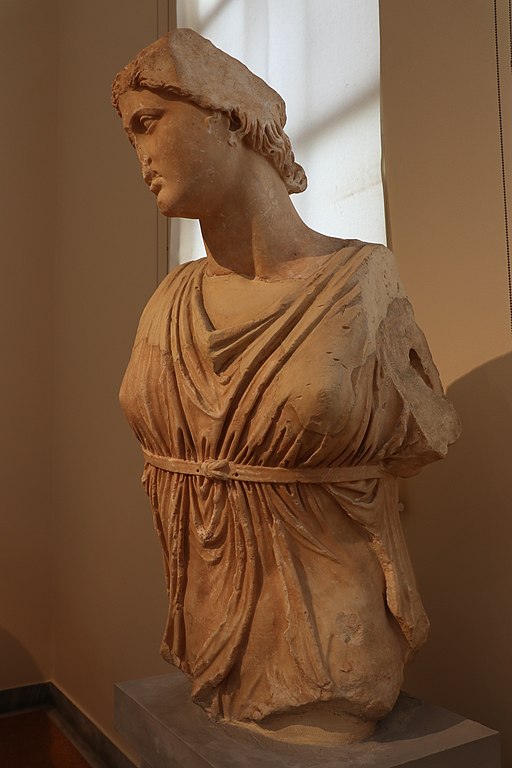


Ancient Roman wedding belt and the knot of Hercules

Ancient Roman brides wore a special dress and a veil and even wove flowers in the hair. What made their wedding attire unique is the girdle or belt that they wore. This belt was an essential part of bridal etiquette. By tradition, it was tied by the bride's mother with the knot of Hercules on the morning of her wedding. It represented the bride's purity, and with Hercules being the guardian of married life this strong knot could only be untied by the bride’s new husband on the wedding night. This knot created by two intertwined ropes can be traced back to ancient Egypt where it was used as a healing amulet, but in ancient Greece and ancient Rome where Hercules was known for his strength, it was a strong knot incorporated into a protective girdle worn by brides. Roman lore suggests the knot symbolized the legendary fertility of Hercules and in some way is related to the legendary Girdle of Diana captured from the Amazon Queen Hippolyta.


Marriage a negotiated deal

In ancient Rome, the male head of the household (the Paterfamilias) was responsible for finding a good match for all the children in his family. Marriage had to be outside the family. They weren’t allowed to even marry third or fourth cousins. While this sounds like an arranged marriage, one difference is that both the bride and groom had to be consenting adults and they could only be married to one person at a time (there were no divorces). However, what ‘consenting adults’ means today is far different from what it meant back then. The minimum age for females to marry was 12 and boys had to be at least 14. 
 
Once a suitable person was found, both families entered negotiations to decide which family would provide for the couple. Once the agreement was made the woman brought a dowry to her new husband’s family.

Marriage was looked at as a contract and some suggest that the giving of engagement rings in ancient Rome may have been used to signal that a contract had been made between the couple and their families. So while many practice some parts of these traditions it is easy to see why other parts have been left along the path of history.

 ***

Some links in this post are affiliate links. We are a participant in the Amazon Services LLC Associates Program, an affiliate advertising program designed to provide a means for us to earn fees by linking to amazon.com and affiliate sites.

Thanks so much for being part of our success.
 
 Photo credits: wikimedia, wikimedia, Amazon


Saturday, September 19, 2015

History of the engagement ring


When you think of an engagement ring, the first thing that pops into mind these days is a diamond ring, but the diamond ring is rooted in the culture of European royalty and that's not where the history of the engagement ring begins. In fact, engagement rings can be traced back to wedding traditions made popular during the Renaissance era. It was a band of sterling silver inscribed with a poem or "poesy" but even before this, history of the engagement ring points all the way back to the ancient Egyptians.

Some ancient engagements rings were made of bone.

First engagement rings


In ancient Egypt the first engagement rings were made out of hemp, leather, bone or ivory, and were worn on the fourth finger of the left hand. These rings were thought to symbolize the endless circle of love between a couple.

This tradition was picked up by the Greeks after Alexander the Great conquered Egypt in 332 BC. The betrothal bands they wore, though, were usually made of iron, unless you were wealthy. The rich wore more expensive metals including: copper, silver or gold. At times, these rings were engraved with a message or poem which started the tradition of engraving engagement rings and wedding bands.

https://amzn.to/2QBhHaw
Today diamond and gold engagement rings are traditional.

Diamond and gold engagement rings

Diamond and gold engagement rings were very rare. The most notable was in 1477 when Archduke Maximilian of Austria bestowed one to Mary of Burgundy. Medieval Italians used precious stones as part of the groom's payment for his bride. They gave a diamond engagement ring because they believed the diamond was crafted in the flames of love.This payment symbolized the groom's intent to marry.

Then in 1518, the two-year-old Princess Mary, daughter of King Henry VIII, was given a diamond ring as a promise for an arranged marriage with the infant son of King Francis I of France.

Poesy Ring

For the most part, regular every-day people couldn't afford an expensive ring as a pledge of faithfulness. In the 15th through the 17th century in Eastern Europe, plain poesy rings (gold finger rings with a short inscription on their surface) with inscribed messages made popular betrothal rings.

Gimmel rings


In Ireland, a wedding tradition that began during the Renaissance, included interlocking gimmel rings. One of the rings served as a betrothal ring for the bride, another was worn as a betrothal ring for the groom, and the third ring was held by the best man until the wedding day.

Evolution of engagement rings

Until the late 19th century, engagement rings among the wealthy were made from colored gemstones. Once African diamond mines made the precious gems more accessible, the Victorians favored a heart-cut solitaire diamond accented with rubies which were a symbol of passionate love, sapphires carried divine favor, or emeralds, which were thought to attract good fortune. Emeralds were historically the sacred stone of Aphrodite, the Greek goddess of love, and Venus, the Roman goddess of passion.


Victorian Era Engagement Ring

Times changed, and with them wedding traditions and customs evolved. Dowries became a tradition of the past, laws changed, and women were able to sue their fiances for breaking engagements. Engagement rings became a source of financial security and were made of rubies, opals, emeralds and turquoise.


Princess cut single solitaire engagement ring


Tiffany introduced single solitaire engagement ring

It was Tiffany & Co. who introduced the single solitaire in the U.S. in 1886. This ring style was drastically different than the customary embedded bezel mount. The new cut showcased the jewel's natural shine and quickly became the most requested ring by American brides. It is still the most popular engagement ring setting in the U.S. today, with an estimated 80 percent of modern brides wearing a diamond engagement ring. This popularity can be traced back to the marketing campaign of DeBeers back in 1947 -- "A Diamond is Forever." It embedded the diamond engagement ring into America's mainstream society as the most coveted of engagement rings.

 * * *

Some links in this post are affiliate links. We are a participant in the Amazon Services LLC Associates Program, an affiliate advertising program designed to provide a means for us to earn fees by linking to amazon.com and affiliate sites. 
 
Thanks so much for being part of our success.